
Remittance Service Licensing in Canada
Sending money home for your community means registering with FINTRAC before you begin. We handle your registration, we build the customer and corridor controls the regulator expects, and we keep your remittance service running.
Remittance Services Must Register With FINTRAC
Providing remittance services makes you a money services business under the PCMLTFA, whether you serve walk-in customers at a counter or you operate entirely online. Registration is mandatory before your very first payout, and remittance providers face some of the closest regulatory attention of any sector.
Small Payments, High Volumes, Real Scrutiny
Remittance is defined by many small transfers rather than a few large ones, and that pattern brings its own particular challenges. Customer identification at low values, repeated senders, concentrated destination corridors, and cash funding all attract attention. Your controls must handle real volume without ever losing sight of individual risk.

FINTRAC Registration
We register your remittance service and declare your money transferring activities accurately.
Customer Controls
We build identification and due diligence procedures suited to high-volume, low-value transfers.
Corridor Risk
We assess your destination countries and build the enhanced controls each corridor requires.
Reporting Setup
We implement your transfer reporting, your record-keeping, and your suspicious activity procedures.
Ready to Simplify Your Compliance?
Remittance Providers We Support
We support community remittance operators, diaspora money transfer services, digital remittance apps, agent-based payout networks, and the businesses sending funds from Canada into Asia, Africa, the Caribbean, and Latin America.
We support banks with program design, oversight, & regulatory examination readiness.
We help credit unions meet obligations proportionate to their membership and scale.
We handle registration, renewals, reporting, & controls FINTRAC expects from you.
We cover Bank of Canada registration alongside your anti money laundering obligations.
We establish what your wallet activity triggers, then build only what applies.
We build compliance around what your product does, before volumes and questions arrive.
We register virtual currency dealers and build the reporting their activity demands.
We support financial institutions across registration, program build, and reporting duties.
Why Remittance Providers Choose Us
Volume Ready
We design controls that work at remittance volumes, so compliance never becomes the bottleneck at your counter.
Corridor Aware
Your destination countries shape your risk, so we build enhanced measures around the corridors you actually serve.
Banking Secured
Remittance providers are routinely de-risked by banks, so we build the documented depth that protects your accounts.
Serving Remittance Firms Across Canada
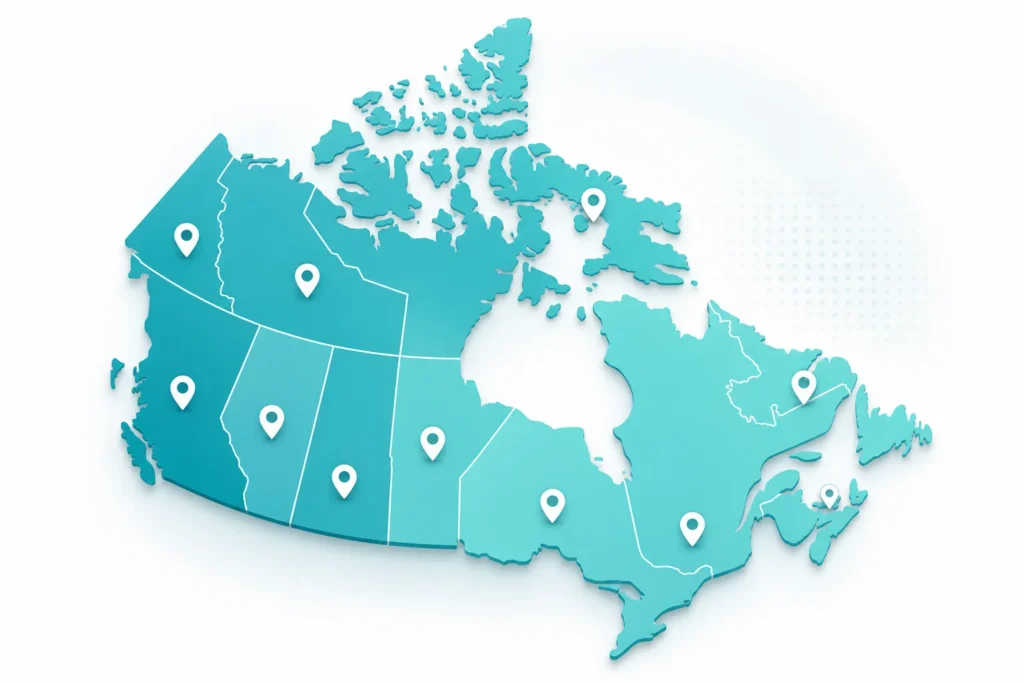
We register and support remittance providers right across Canada, from Toronto and Montreal through to Vancouver and Calgary, including the community operators serving diaspora populations and firms sending funds worldwide.












Let's Talk About Your Compliance Needs
Schedule a Free Consultation
Whether you’re starting a new MSB or need ongoing AML support, our team responds within one business day.














Remittance Licensing Questions
Clear answers to the questions remittance providers ask most about FINTRAC registration, customer identification, and running a compliant remittance service.

Do I need a remittance licence?
You need FINTRAC registration as a money services business. Canada issues registrations rather than licences, but registering before you operate is mandatory.
Must I identify every customer?
Identification obligations depend on transaction value and type, but your program must define exactly when verification is triggered and apply it consistently.
Do destination countries affect compliance?
Yes. Corridors involving higher-risk jurisdictions demand enhanced due diligence, sanctions screening, and closer scrutiny of both senders and beneficiaries.
What about repeated small transfers?
Frequent low-value transfers by the same sender can indicate structuring, so your monitoring must aggregate activity rather than assess transfers individually.
Why is banking so difficult here?
Banks treat remittance as high risk and de-risk aggressively. Strong documented controls and clear corridor oversight are what keep your accounts open.